Case Study 02 · Batch On-Model Production

Built for 1,000 SKUs a week.
One studio's batch, start to finish.

The line runs 1,000 to 1,500 SKUs a week, every view per SKU, in 4K. What makes that safe is the gates, so here is one European studio's batch from the inside: flat lays, mannequin shots and character sheets in, a verdict per SKU before any spend, measured colour, a person on every frame, a rework in seven days.

Client
E-commerce studio, Europe
Line capacity
1,000 to 1,500 SKUs a week, 4K
First delivery
8 days from the folders
Rework to AD notes
7 days, 74 frames, 0 failed

The brief

Every view per SKU, on one locked model identity. Front, back, three-quarter, profile, detail and a styled frame, generated from the garment's own flat lay or mannequin shot, with the same face and body across the whole collection. The studio's spec, not ours.

Colour that matches the studio's references, not a mood. The hero garment and any second garment had to read as the same colour in every view, against the client's own photographs. Lighting had to match their studio deck: even across the face, with the eye-socket and chin shadows their art director expects.

Their folder structure, their naming, their Drive. Inputs arrived in 111 different folder shapes and four naming schemes for the character sheets. Delivery had to land in the client's own tree, under the client's file names, with an uncorrected copy beside every frame for their editors.

One SKU, every view, same model
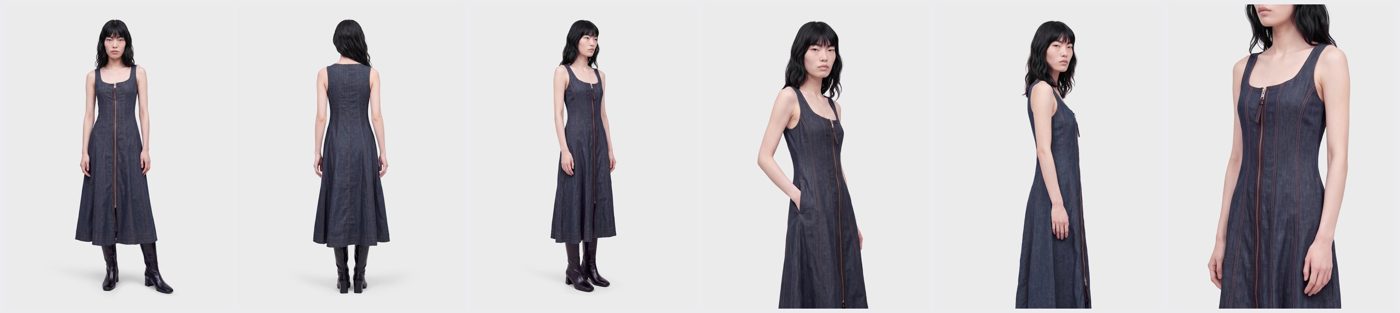
Seven on-model views of one dress generated on a locked model identity: front, back, three-quarter, profile, detail and styled frames

One SKU from the batch at web size. Originals are 4K. Garments are real products shown with the client's agreement, without brand names; the model is a synthetic identity.

How the batch ran

01
Preflight before any spend
Every SKU folder got a verdict first: WILL GENERATE, WILL NOT, or CHECK FIRST, with the reason. 57 SKUs were held because their character sheets could have meant more than one model. The held list went to the studio as a sheet with one question per SKU; they answered, we ran. Nothing was generated on a guess.
02
Generate, measure, check by people
Each frame was generated on the locked identity, then measured part by part against the client's references: garments, skin and backdrop separately. A lighting gate rejected frames whose shadows did not match the deck. Every frame that passed the instruments was still looked at by a person before it was filed.
03
Deliver into their tree, then rework
Delivery landed in the client's Drive, in their names, with a Non Color Corrected twin of every frame. When the art director's notes came back (posing, tint, the three-quarter view facing the wrong way), 74 frames were regenerated to the new rules and redelivered at the same link within seven days. None failed the second check.

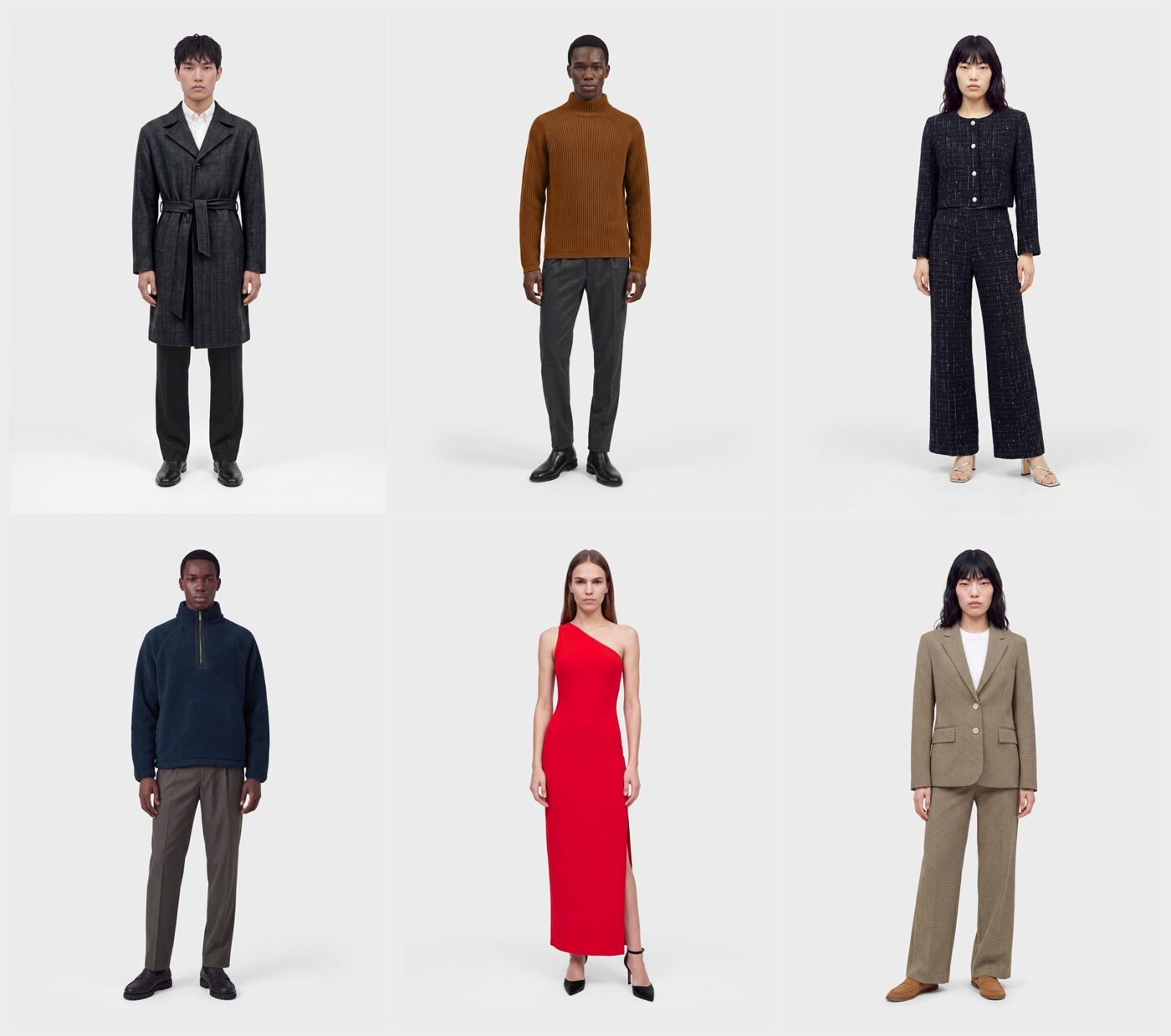
Six looks from the batch

Six on-model looks from the 123-SKU batch, each on the same locked model identity

Six of the batch, same identity throughout. Eighteen looks, every view, in the gallery →

The numbers

1,000+
SKUs a week
the line is built for
57
Held before generation,
one question each
8 days
Folders in to full set
delivered, 4K
−59.8%
Per finished image vs a
studio shoot at this volume

The preflight verdicts
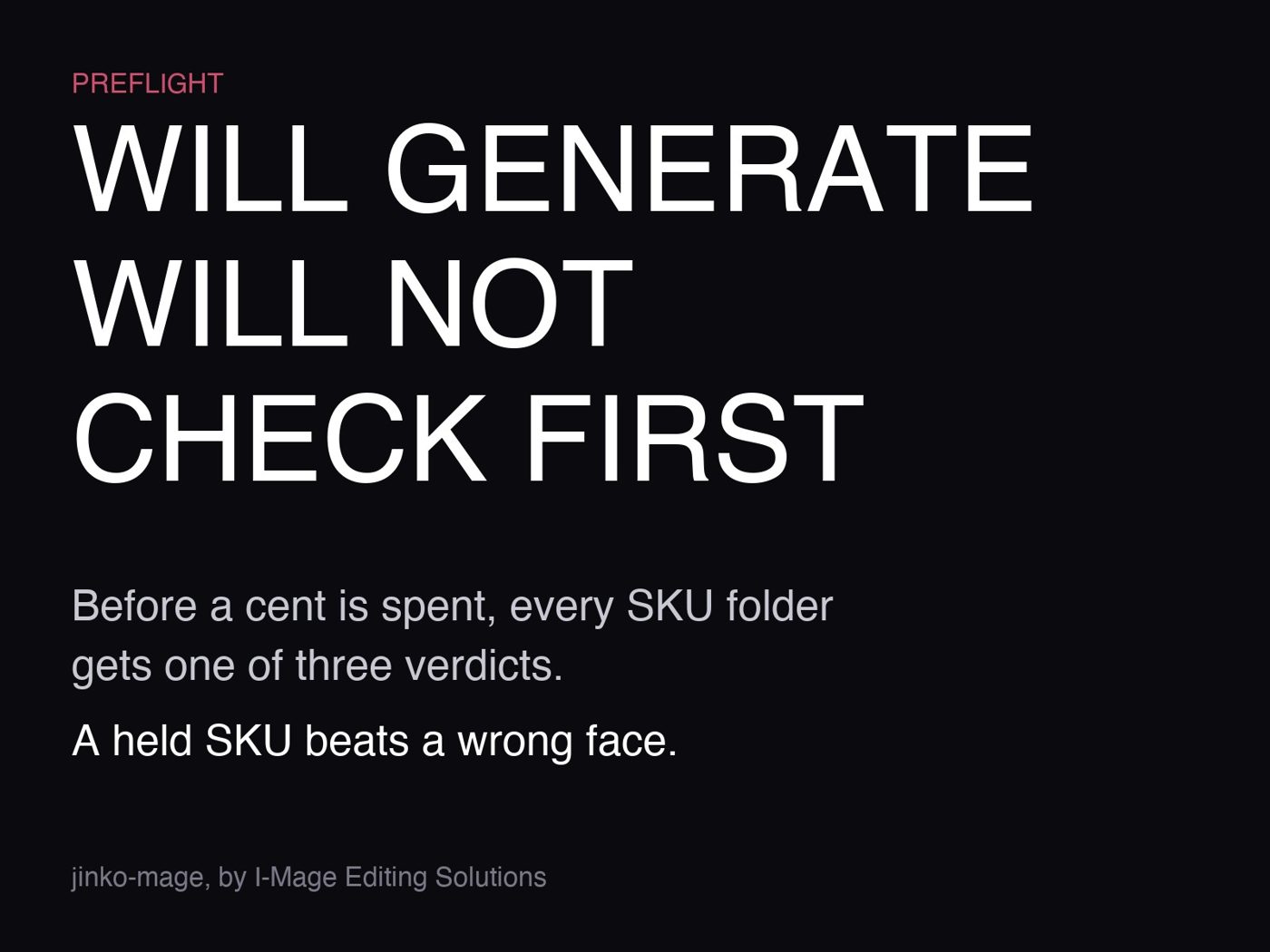
Preflight report card: WILL GENERATE, WILL NOT, CHECK FIRST, before a cent is spent

The report every batch gets before a frame is generated.

The key insight: the 57 held SKUs were the good part. A supplier that generates on a guess ships a wrong face in 4K and finds out from the client's QC. A supplier whose engine is allowed to say no ships a question instead, costs the studio one afternoon of answers, and delivers a set the art director can mark up rather than reject. Every rule in our pipeline today is a rule a client's QC once wrote in red.

Your garments,
the same way.

A 10-SKU pilot runs the full pipeline on your inputs and your rules, with the preflight report and the batch report, credited against your first batch.